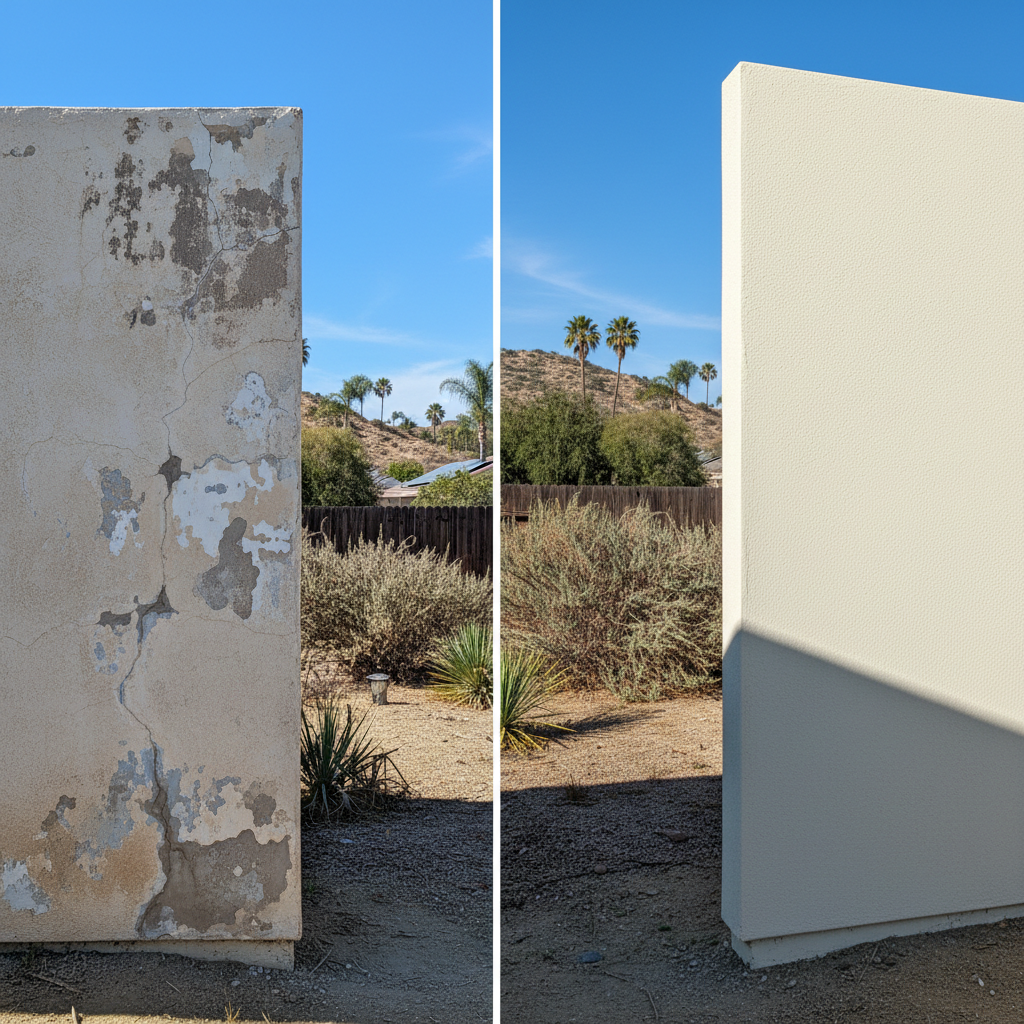
Alright, so you're looking into EIFS for your home here in Fontana. Smart move, it's a great system when it's done right. But when we talk EIFS, there are actually a couple of different ways to put it on your house, and knowing the difference is key. You've got your barrier EIFS and your drainage EIFS. People often just say "EIFS" and don't realize there's a distinction, but trust me, it matters, especially with our local weather patterns and how homes are built around here.
What's Barrier EIFS All About?
Barrier EIFS is the original system, the one that really kicked off EIFS's popularity. The idea behind it is pretty simple: it's a multi-layered wall system designed to be a complete barrier against water intrusion. You've got your insulation board, then a reinforced base coat, and finally, that finish coat you see. The whole point is to stop water from getting in at all. It's like a really tough, seamless shell around your house.
When it's installed perfectly, and I mean perfectly, barrier EIFS works great. It's excellent for insulation, which means lower energy bills, and it gives you a fantastic, smooth finish. It's also generally a bit less expensive to install upfront compared to its drainage cousin because it involves fewer components and a less complex installation process.
The Catch with Barrier EIFS (Especially Here)
Now, here's where we get real. Nothing is ever 100% perfect, and that goes for barrier EIFS too. The main challenge with barrier EIFS is that if water *does* find a way in – and believe me, water is persistent – it can get trapped. We're talking about tiny cracks from settling, or maybe a poorly sealed window or door flashing. Once that water's behind the EIFS, it has nowhere to go. It just sits there, and that's when you start having problems: rot in the sheathing, mold, and eventually, structural damage. It's like a slow-motion disaster waiting to happen if the installation isn't flawless or if maintenance gets neglected.
Considering our occasional heavy rains and the way homes can shift a bit over time, especially on some of the older, less stable soil types you find in parts of Fontana, relying solely on a perfect barrier can be a gamble. I've seen firsthand what happens when barrier EIFS fails, and it's not pretty, or cheap, to fix.
Enter Drainage EIFS: The Smarter Option
This is where drainage EIFS comes into play, and frankly, it's what I recommend for most homeowners in our area. Drainage EIFS, sometimes called 'water-managed' EIFS, takes a different approach. It acknowledges that some water might eventually get past the outer layer – because, let's be honest, stuff happens. So, instead of just trying to block everything, it builds in a way for any water that *does* get in to escape.
How does it do this? It adds a couple of crucial layers. First, there's a weather-resistive barrier (WRB) directly over your sheathing, just like you'd have with traditional stucco or siding. Then, there's a drainage mat or channels built into the insulation board itself. This creates a small gap, a pathway, behind the EIFS. If water gets past the finish coat, it hits the WRB, runs down that drainage plane, and exits through weep holes at the bottom of the wall. It's a much more forgiving system.
Why Drainage EIFS Wins for Fontana Homes
Let's talk about the benefits of drainage EIFS:
- Moisture Management: This is the big one. It's designed to handle water, not just block it. This significantly reduces the risk of hidden rot, mold, and structural damage that can plague barrier systems if they're compromised.
- Durability: By preventing moisture buildup, you're looking at a much longer lifespan for your wall system and the underlying structure. It's built to last, even with our hot summers and those unexpected winter downpours.
- Peace of Mind: Knowing your home has that extra layer of protection against water intrusion is huge. You won't be constantly worrying about every hairline crack.
- Performance: You still get all the great insulation benefits of EIFS, leading to those energy savings you're looking for.
Now, the upfront cost for drainage EIFS is typically a bit higher than barrier EIFS. You've got those extra materials – the WRB, the specialized insulation board, and the added labor for the more complex installation. But think of it as an insurance policy. The cost of repairing water damage from a failed barrier system can be astronomical, far outweighing the initial savings.
My Recommendation for Your Home
Look, I've been doing this a long time with Fontana Stucco & Plastering, and I've seen a lot of different homes and a lot of different wall systems. For homeowners in Fontana, especially with our climate and the way buildings settle, I strongly recommend going with a drainage EIFS system. It's the more robust, more reliable, and ultimately, more cost-effective choice in the long run.
You get the superior insulation and aesthetic appeal of EIFS, but with the added security of a system that can manage moisture effectively. It's just a smarter way to protect your biggest investment. Don't cut corners on something as critical as your home's exterior envelope. Invest in the system that's built to last and protect against the elements, even when things aren't absolutely perfect.