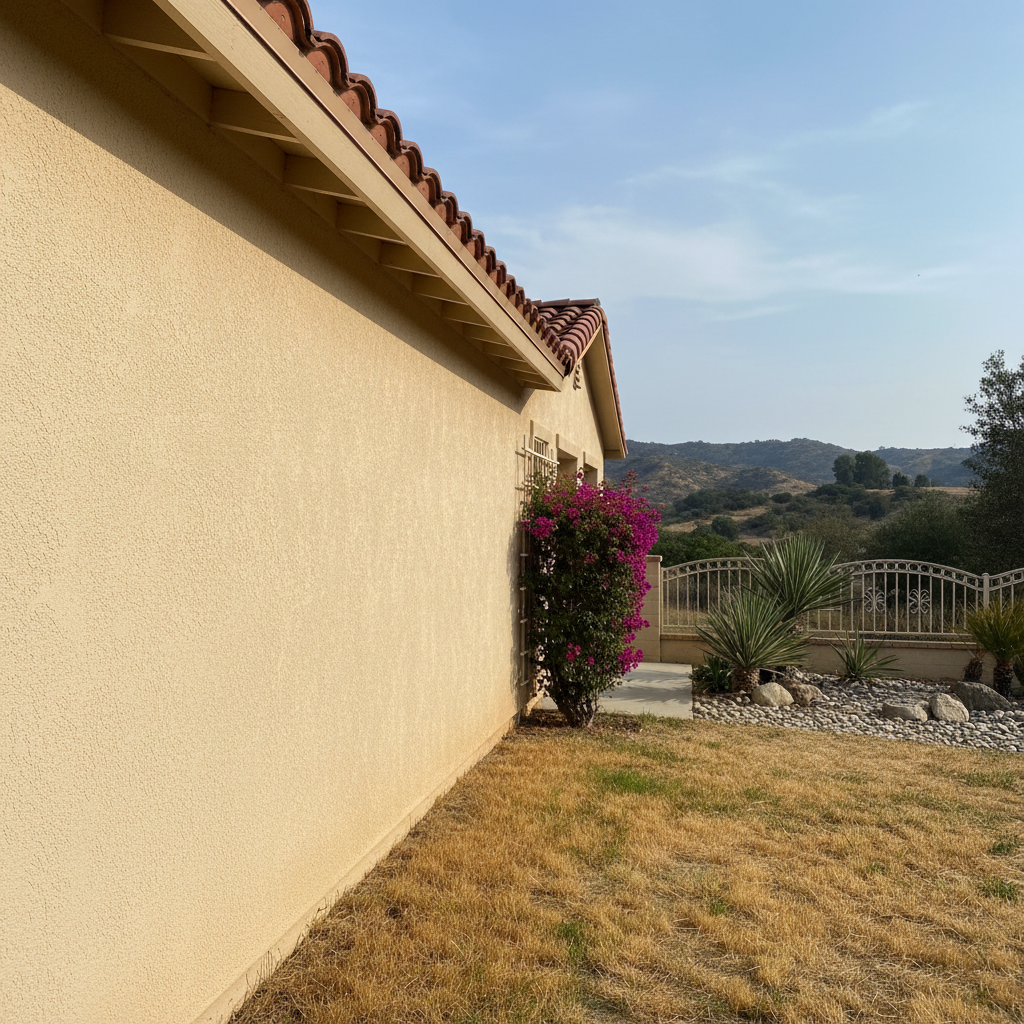
Alright, let's talk about stucco. You have it on your home here in Fontana, and you want it to last for a long time. That is a smart way to think about things. A good stucco job can easily last anywhere from 50 to 80 years, especially in our Southern California climate, but it is not magic. It needs a little attention from you to really go the distance. We have seen a lot of stucco in our years with Fontana Stucco & Plastering, and we can tell you, a little regular maintenance goes a very long way.
How to Extend Your Stucco's Lifespan
Extending the life of your stucco comes down to a few key things: keeping it clean, managing moisture, and addressing small issues before they become big headaches. Our climate here in Fontana, with its intense sun and occasional Santa Ana winds, puts some unique stresses on stucco. You will see more expansion and contraction here than in cooler, wetter places, which can lead to cracks in the stucco finish.
- Keep it Clean: You would be surprised what a good rinse can do for your stucco. Dirt, dust from those winds, and even pollutants can build up on the surface. We tell folks to give their stucco a gentle wash with a garden hose at least once a year. If there is some stubborn grime, a soft-bristle brush and a mild detergent will usually do the trick. Just do not go at it with a high-pressure washer set too strong; you can actually damage the finish and force water where it should not go behind the stucco.
- Manage Your Landscaping: This is a very important one. Keep plants, shrubs, and trees trimmed back from your stucco walls. You want good airflow all around your house. If foliage is constantly touching the stucco, it can trap moisture, which is a recipe for trouble down the road. Also, make sure your irrigation system is not constantly spraying your stucco walls. That constant dampness is not good for anything on your home.
- Check Your Drainage: Gutters and downspouts are your stucco's best friends. Make sure they are clean and directing water away from your foundation. And speaking of foundations, keep soil, mulch, or concrete paving at least 2 to 4 inches below the metal weep screed at the base of your wall. That weep screed is designed to let moisture escape from behind the stucco, and if it is blocked, you are inviting rot and other problems into your home.
- Consider a Breathable Coating: If your stucco is unpainted, a fog coat can refresh its color and protect it from the elements. If it is already painted, make sure any new paint is a high-permeability acrylic or elastomeric coating. These coatings allow the stucco to breathe, which is very important in our Fontana climate. Never use standard latex paint on raw, unpainted stucco.
Regular Maintenance: What to Look For
You do not need to be a stucco expert to do a quick check-up on your home. We recommend doing a visual inspection of your home's exterior at least twice a year, maybe once in the spring and again before winter. This helps you catch small issues before they become larger problems.
- Cracks: Hairline cracks are pretty common, especially with our temperature swings and even minor seismic activity here in California. These are usually just cosmetic, but keep a close eye on them. If they get wider than about 1/8 inch, or if you see a network of spiderweb cracks, that is a different story and needs more attention.
- Caulking and Sealants: Check around windows, doors, and where the stucco meets other materials on your home. Over time, caulk can dry out and crack, creating openings for water to get behind your stucco system.
- Stains and Discoloration: Dark streaks, especially below windows or near the roofline, often mean water is getting in. White powdery stuff, called efflorescence, is also a sign of moisture moving through the stucco and bringing salts to the surface.
- Hollow Spots or Bulges: Tap on your stucco occasionally. If you hear a hollow sound, or if you see areas that are bulging out, that is a red flag. It usually means the stucco is delaminating, or separating from the wall, often due to trapped moisture behind the finish.
Warning Signs That Mean Trouble
Some things you see are more than just cosmetic issues. These are warning signs that you have a problem brewing that could lead to bigger, more expensive repairs if you ignore them for too long.
- Cracks that are growing, wider than a credit card, or have crumbling edges: These are not just surface issues. They can be signs of structural movement or significant water intrusion behind the stucco.
- Soft spots or stucco that feels spongy: If you push on an area and it gives, or feels soft, that is a definite sign of moisture damage to the sheathing or framing underneath the stucco.
- Stains that keep coming back, especially after you have cleaned them: This indicates an ongoing water source that needs to be found and fixed.
- Bubbling or blistering stucco: This happens when water gets trapped behind the finish and causes pressure to build up.
- Mold or mildew growth: Especially in areas that are not typically damp, this can point to hidden moisture issues within the wall system.
- Stucco crumbling or falling off the wall: This is severe damage and needs immediate attention from a professional stucco contractor.
When to Call a Professional
Look, some small stuff you can handle yourself. Patching a tiny hairline crack with some flexible, textured caulk, for instance, is doable for a handy homeowner. But for anything more than that, you really should call in a pro like us at Fontana Stucco & Plastering.
You need a professional stucco contractor if:
- The cracks are wide, deep, or show signs of movement. Diagonal cracks radiating from window corners, for example, often indicate stress points in the structure.
- You find soft spots, bulging, or delamination. These issues almost always mean there is moisture damage behind the stucco that needs to be properly assessed and repaired by an expert.
- There are persistent stains or efflorescence. Fontana Stucco & Plastering can help identify the source of the moisture and fix it, not just cover it up with paint.
- You suspect improper installation of your stucco. Unfortunately, this happens sometimes, and it can lead to widespread problems throughout the home.
- The damage is around windows, doors, or the base of your walls. These are critical areas where flashing and drainage are essential, and improper repairs can lead to major water intrusion into your home's interior.
Trying to DIY a bigger stucco repair can end up costing you more in the long run if it is not done right the first time. We have the tools, the experience, and the knowledge of Fontana's specific conditions to make sure your stucco repair is done correctly, from assessing the underlying issues to matching the texture and color of your existing stucco seamlessly. Fontana Stucco & Plastering takes pride in our work.
Your home is a big investment. Taking care of its stucco exterior means protecting that investment for many years to come. Do not wait until a small problem turns into a major headache for your home and your wallet.